
The short answer
- Safe access around roofs and wires affects the work method and cost; keep clear of damaged branches.
- Tree height, crown spread and the number of trees determine how much pruning work is involved.
- Removing heavy oak branches and hauling brush usually requires more handling than light pruning on a small pear.
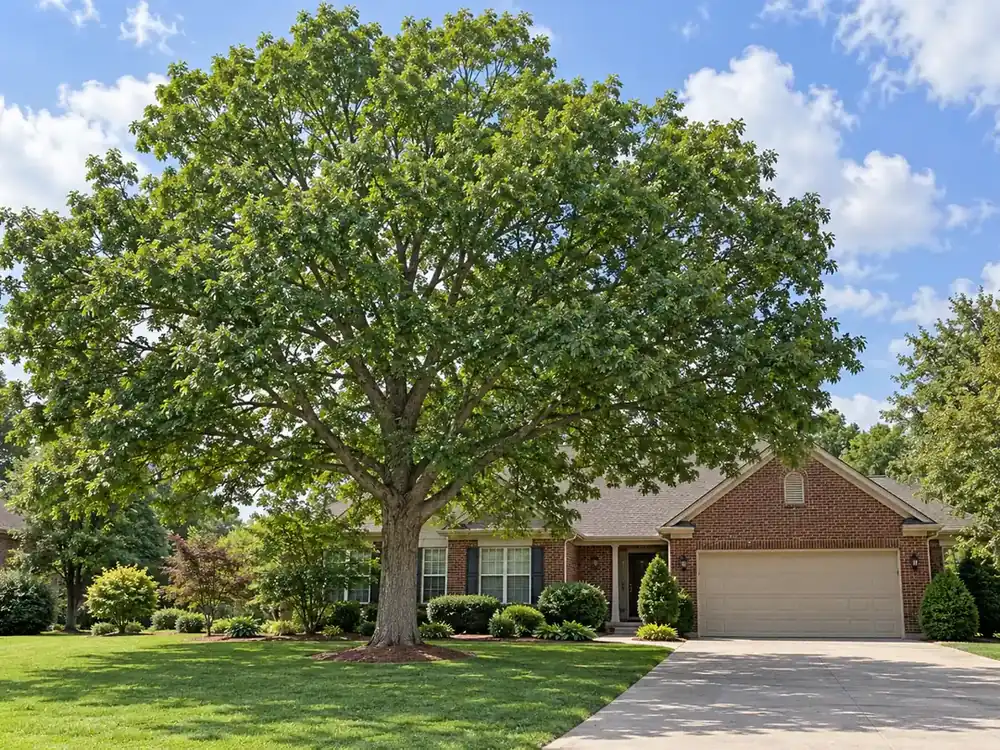
The Trees and Access Behind Pruning Costs
Tree trimming service cost depends on the branches being addressed, the equipment needed to reach them and the cleanup included. A high poplar crown above a roof involves different work from a small pear beside an open driveway. Call to describe the tree and the clearance you need.
Crown Size and Branch Height
Large oak branches and high tulip poplar branches can add working time and careful handling. From a clear spot on the ground, look at how far the crown extends over the house, driveway or fence. Call when branches touch a roof, cross heavily or show a fresh break.
Height alone doesn't describe the job. A broad oak may need attention across several sides of its crown. A tall poplar may have only a few specified branches to address, but reaching those branches still matters. Counting the trees helps define the scope; counting trunks alone doesn't reveal the work in each crown.
Forks, Splits and Fence-Line Trees
Visible cracks, rubbing branches and broken ends tell your tree pro where to focus the assessment. Look at the main forks of a maple or Bradford pear without stepping beneath damaged limbs. A new split is a reason to stand back and call, rather than treat the job as routine shaping.
For hackberry, pine or cedar beside a fence, describe branches extending across the boundary or blocking a walkway. Narrow space between the trunk and fence changes access. Deadwood and storm-broken limbs may require a different work sequence from healthy branches selected for clearance.
| Tree or site detail | Effect on the job |
|---|---|
| Broad oak crown | More branch weight and debris handling |
| High poplar crown | Greater reach and equipment needs |
| Maple or pear with a split | Assessment of the damaged fork |
| Several trees across the yard | Repeated setup and more total pruning |
| Fence, roof or narrow entrance | Less room for access and branch handling |
Equipment Access and Wire Clearance
The route to the tree helps determine whether professional climbing or a bucket truck suits the work. A truck needs suitable access and room to operate. A fenced backyard may call for a different approach. Your tree pro chooses the method after assessing the tree and surroundings.
Keep people, pets and cars away from cracked or hanging limbs and leaning trees. Treat downed or sagging wires as live, stay well away, and contact the electric utility serving the address or 911. Take photographs only from a safe distance.
Selective Pruning Instead of Topping
Thinning addresses selected branches within a crown, while raising addresses lower branches for clearance. The goal determines the scope. Clearing a driveway and removing scattered deadwood are different tasks.
UT Extension judges topping, a common practice to reduce tree size, to be severely damaging to a tree's long-term health. Ask your tree pro to describe the pruning purpose and the branches involved.
Cleanup and Planning Ahead of Storms
Brush handling, hauling and the final cleanup all affect tree trimming prices. Specify whether larger wood stays on the property or leaves with the brush. A long carry from a backyard oak adds handling even when the pruning itself is straightforward.
Discuss weak or damaged branches ahead of storm season. A pruning assessment identifies work appropriate to the tree; it doesn't make a crown stormproof.
One of our local tree service partners will explain the selected pruning, debris handling and price together so you know the scope when work begins. Visit the tree trimming and pruning page for the service details.